Spring 2026 Disease Newsletter: Foodborne Illnesses
Foodborne illnesses peak during warmer months and occur from consuming contaminated food or drinks. Common symptoms include diarrhea, cramps, and fever; severe cases require a healthcare visit. Although there are many types of foodborne bacteria and viruses, Campylobacter, Salmonella, and norovirus are major causes of food poisoning.
Campylobacteriosis Cases by Month, 2025
These numbers are preliminary and subject to change.
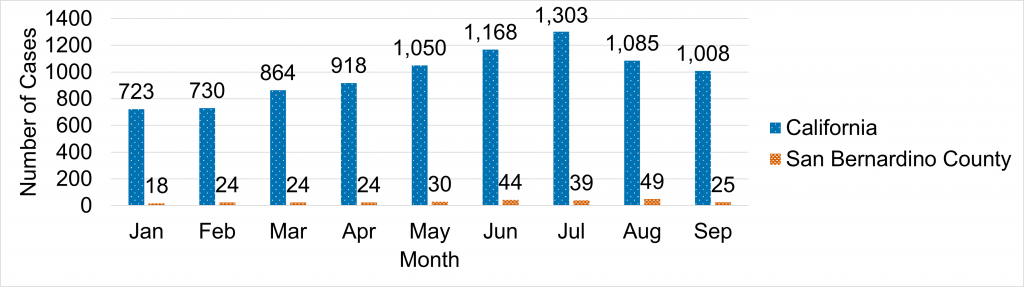
Campylobacteriosis is a bacterial infection typically caused by undercooked poultry, contaminated water, unpasteurized milk, or contact with infected animals. Most people recover within a week, but severe cases may require antibiotics. Symptoms appear 2 to 4 days after infection.
Salmonellosis Cases by Month, 2025
These numbers are preliminary and subject to change.
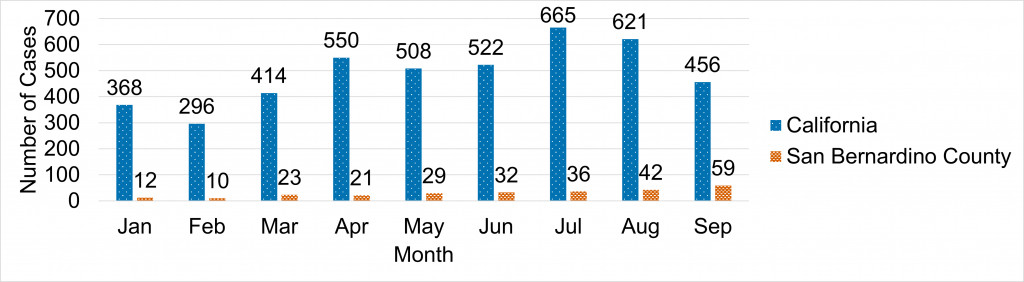
Salmonellosis is a bacterial infection caused by contaminated food or contact with infected animals. Symptoms appear 8 to 48 hours after infection. Most people recover from salmonellosis within 4 to 7 days without treatment.
About Norovirus
Norovirus, also known as the stomach flu, is the most common foodborne illness. It can survive on surfaces and objects for weeks and is very contagious. According to the California Department of Public Health (CDPH), norovirus leads to the following in the United States each year:
465,000 emergency department visits, primarily among young children.
2,270,000 annual outpatient clinic visits, primarily by young children.
109,000 hospitalizations.
Proper Food Handling and Cooking Can Help Prevent Infections
Wash your hands with soap and water before and after handling food.
Safely manage bodily fluids by wearing gloves and disposing of soiled items in plastic bags.
Cook poultry to 165°F, ground meats to 160°F, and fish to 145°F.
Cook your oysters and other shellfish.
Refrigerate food within two hours, or one hour if above 90°F.
Wash all your fruits and vegetables.
For more information on food handling, visit the San Bernardino County Environmental Health Services’ Website or scan the QR code below.

The California Department of Public Health (CDPH) announces food recalls to protect the community from foodborne illness. Click the link to go CDPH Food Recalls or scan the QR code below.
Click to access the Inaccessible PDF Spring 2026 Disease Newsletter.