SAN BERNARDINO COUNTY MATERNAL, CHILD, AND ADOLESCENT HEALTH (MCAH) Quarterly Newsletter
April – June 2026
Black Maternal Health Week
April 11 – 17
Black Maternal Health Week raises awareness about the urgent need to improve health outcomes for Black mothers and birthing people. Black women face higher rates of pregnancy complications and chronic conditions like diabetes, high blood pressure, heart disease, asthma, kidney disease, and mental health challenges. Additionally, Black birthing individuals are dying at four times the rate of other birthing persons.
These health issues increase the risk of complications such as preeclampsia, preterm birth, cesarean delivery, low birth weight, and maternal mortality. Black Maternal Health Week highlights the voices and experiences of Black families, while promoting community solutions and policies that address systemic bias, expand access to quality care, and improve social factors like housing, nutrition, and economic stability.
Vaccination Recommendations for Children
Following the American Academy of Pediatrics recommended vaccination schedule is one of the most effective ways to protect children from serious and potentially life-threatening illnesses. Vaccines help build strong immunity early in life, before children are exposed to dangerous infections. Parents are encouraged to speak with their child’s healthcare provider to ensure their child is up to date on all recommended vaccines and to address any questions or concerns.
The American Academy of Pediatrics immunization schedule provides evidence-based guidance on when children and adolescents should receive recommended vaccines to protect against serious, preventable diseases. Developed with the Centers for Disease Control and Prevention and the Advisory Committee on Immunization Practices, the schedule ensures vaccines are given at the safest and most effective times.
Click Here To Learn More About The AAP 2026 Vaccination Schedule
Preeclampsia Awareness Month
Preeclampsia Awareness Month, observed each May, is dedicated to raising awareness about preeclampsia, a serious pregnancy-related condition characterized by high blood pressure and signs of organ damage, typically developing after 20 weeks of pregnancy. If left untreated, preeclampsia can lead to severe complications for both mother and baby, including preterm birth, stroke, and maternal or infant death. Organizations such as the Preeclampsia Foundation work to educate families about the warning signs of preeclampsia, including persistent headaches, vision changes, swelling of the hands and face, upper abdominal pain, and sudden weight gain, and emphasize the importance of early detection and timely medical care.
Mental Health Awareness Month
Mental Health Awareness Month highlights the importance of emotional well-being and reducing stigma around mental health conditions. It is also a vital time to raise awareness about maternal mental health, particularly postpartum depression (PPD), a serious but treatable condition that can occur during pregnancy or anytime within the first year after childbirth.
Click here to read Feelings in Motherhood
Postpartum depression is more than the “baby blues.” It involves persistent feelings of sadness, hopelessness, irritability, or emptiness that last longer than two weeks and interfere with daily functioning. Mothers may experience overwhelming anxiety, difficulty bonding with their baby, changes in sleep or appetite, loss of interest in activities, feelings of guilt or worthlessness, or thoughts of harming themselves or their baby. Without treatment, postpartum depression can affect both maternal well-being and
infant development.
Mental Health Awareness Month reminds us that postpartum depression is a medical condition, not a personal weakness. Early screening, compassionate support, culturally responsive care, and access to treatment can significantly improve outcomes for mothers and families.
Juneteenth
Juneteenth is a powerful reminder of freedom, resilience, and the ongoing pursuit of equity. For the public health community, it is also a moment to reflect on how the legacy of slavery and structural racism continues to shape health outcomes and access to care.
Observed each year on June 19, Juneteenth commemorates the day in 1865 when enslaved African Americans in Galveston, Texas, learned they were free, more than two years after the Emancipation Proclamation was issued. It honors the strength and perseverance of those who endured injustice while celebrating the history, culture, and contributions of Black communities.
Juneteenth also calls us to action. By recognizing the roots of health disparities and working to eliminate them, public health professionals can help advance health equity and social justice while improving systems that ensure every community has the opportunity to thrive.
HIV Testing Day
June 27
National HIV Testing Day highlights the importance of knowing your HIV status as a key step in protecting your health and preventing transmission. Routine HIV testing supports early diagnosis and timely treatment, which leads to better long-term health outcomes and helps reduce the spread of HIV within communities.
For adolescents and teens, testing is an essential part of comprehensive sexual health care. It promotes awareness, reduces stigma, and empowers young people to make informed decisions about their health and relationships. HIV testing is also especially important during pregnancy. Early identification of HIV allows for prompt treatment that can significantly reduce the risk of perinatal transmission and help ensure healthy outcomes for both the pregnant person and the baby. By increasing access to confidential, routine testing for teens and pregnant individuals, we strengthen prevention efforts, support early care, and move closer to ending the HIV epidemic.
Important Events
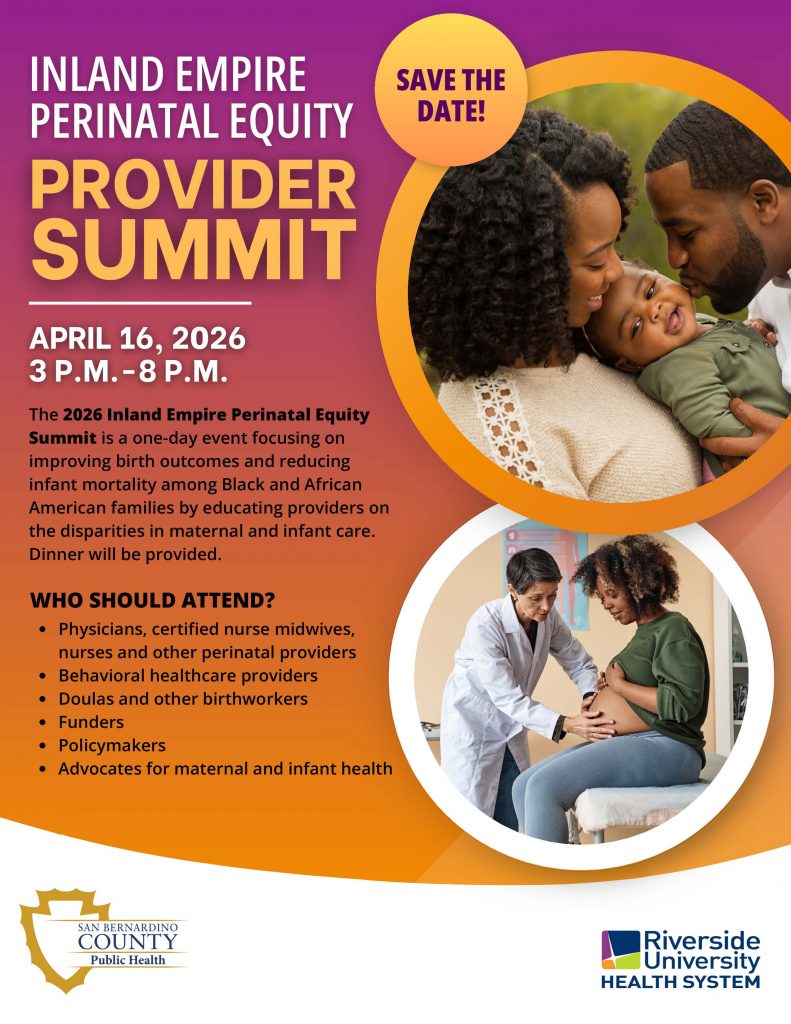
Inland Empire Perinatal Equity Provider Summit Flyer
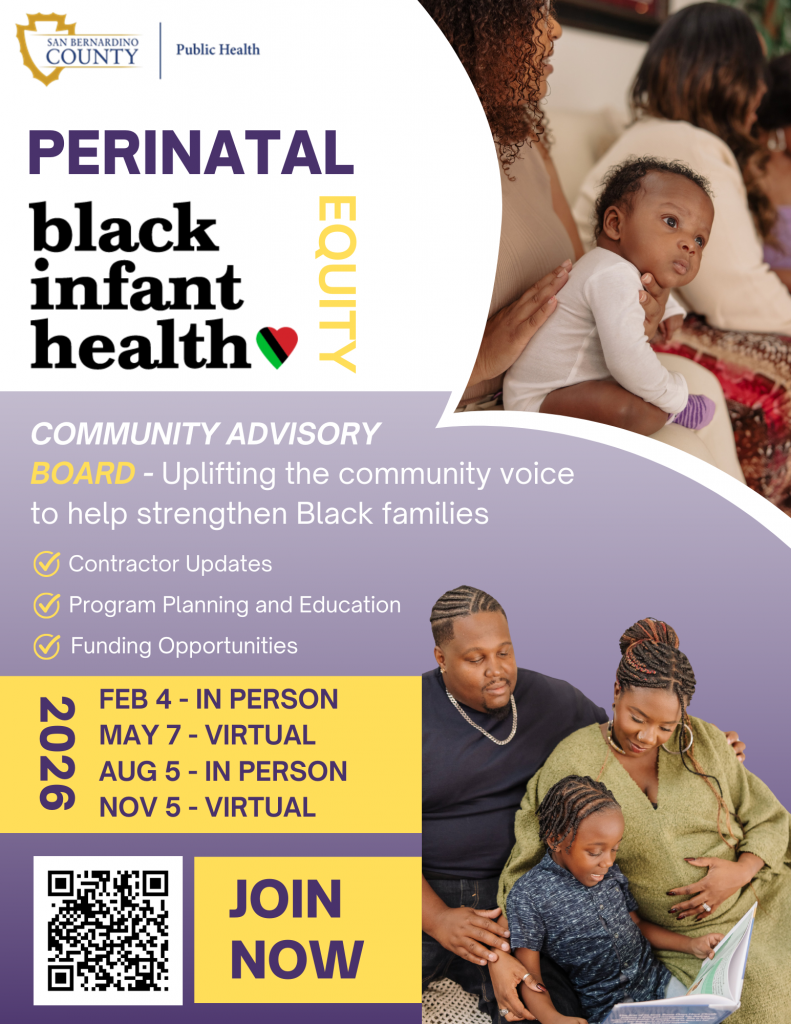
PEI Community Advisory Board Flyer
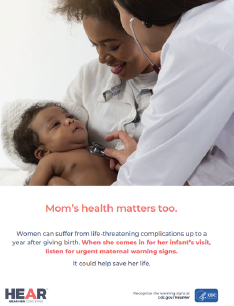
HEAR Her Flyer
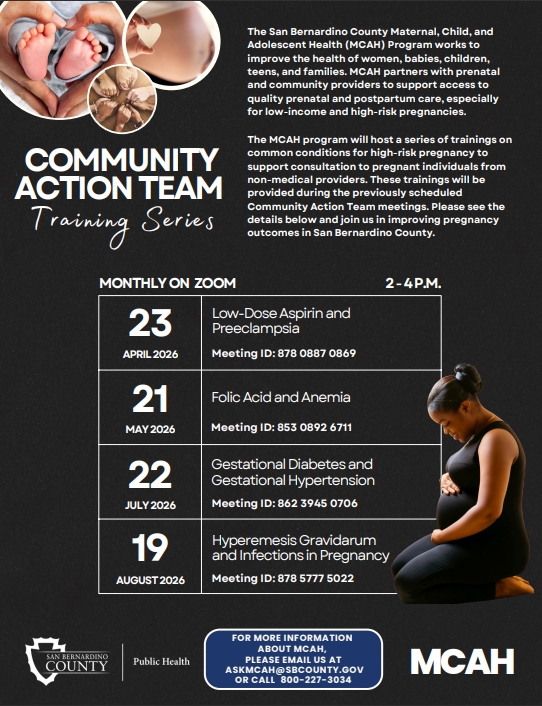
Community Action Team Training Series
Monthly on Zoom from 2-2:30 P.M.
- April 23, 2026: Low-Dose Aspirin and Preeclampsia; Meeting ID: 878 0887 0869
- May 21, 2026: Folic Acid and Anemia; Meeting ID: 853 0892 6711
- July 22, 2026: Gestational Diabetes and Gestational Hypertension; Meeting ID: 862 3945 0706
- August 19, 2026: Hyperemesis Gravidarum and Infections in Pregnancy; Meeting ID: 878 5777 5022
Family Health Services Section
Quarterly Newsletter is an internal publication for local healthcare providers and others interested in improving maternal, child, and adolescent health.
For more information about MCAH, please email us at askMCAH@SBcounty.gov or call 800-227-3034.
For an unremediated PDF version of this newsletter, please click here.