


Healthy Communities Initiative
Our surroundings—where we live, learn, work, and play—significantly influence our health and the choices we make every day. We can create environments that promote well-being by transforming our communities, from homes and schools to public spaces and workplaces. When communities are designed to support health, everyone has a better chance of achieving their highest level of wellness.
The San Bernardino County Department of Public Health’s Healthy Communities Initiative (HCI) is a flexible, supportive program that empowers all cities—whether they have a formal program or are just beginning—to integrate health into every aspect of governance and daily operations. From policy and planning to budgeting and community engagement, HCI partners with community leaders and staff to make health a consistent, strategic priority, creating safer, more vibrant, and more resilient communities where all residents thrive.
Vision
The vision of the Healthy Communities Initiative (HCI) is to create environments and systems that support the highest levels of health for all.
What is a Healthy Community?
A healthy community places health, equity, and well-being at the center of local decision-making. It ensures that residents have safe spaces to live, learn, work, and play; access to essential services; and opportunities to thrive. Building a healthy community goes beyond encouraging healthy choices—it’s about shaping the systems, environments, and policies that make those choices easier and more sustainable.
This approach aligns with the Health in All Policies (HiAP) framework, which emphasizes that health outcomes are shaped by decisions made across many sectors—not just health care. By weaving health considerations into areas such as housing, transportation, land use, education, and the environment, communities can create lasting improvements in quality of life. HiAP ensures that health is consistently factored into local governance and planning, making wellness a shared responsibility across all sectors.
- What Elements Create a Healthy Community?What Elements Create a Healthy Community?

- Strategies to Create Healthy CommunitiesStrategies to Create Healthy Communities

- Healthy City ProgramsHealthy City Programs

No matter the starting point, healthy communities share common elements that reflect a focus on building supportive conditions that benefit the entire population.
- Environments that are safe, clean, and supportive of health
- Opportunities for good quality of life and social connection, and economic well-being
- Reliable access to health care, education, transportation, and essential services
- Policies and systems that prioritize well-being across sectors
This approach also connects with the Vital Conditions for Health and Well-Being framework, which emphasizes that lasting health depends on access to things like safe housing, clean air and water, learning opportunities, meaningful work, and reliable transportation. Together, these vital conditions and community elements help shift the focus from individual choices to the broader systems that shape health.
Learn more about the Vital Conditions for Health and Well-Being framework.
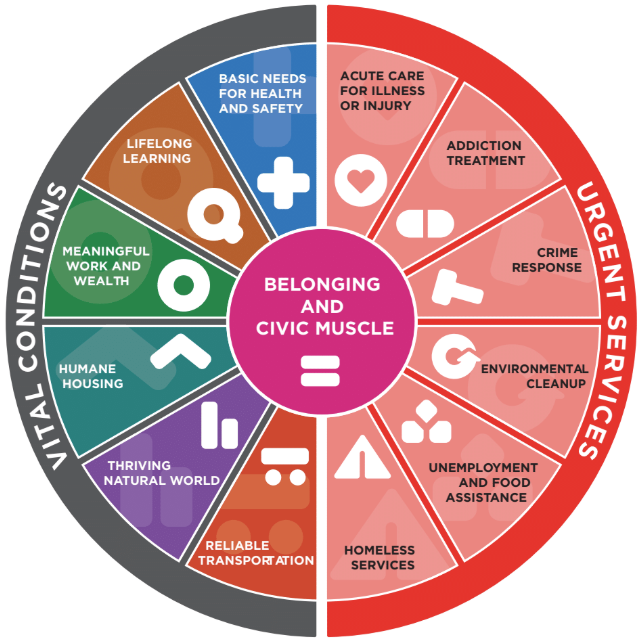

“Shifting the Health Paradigm.” Infographic. Vitalyst Health Foundation. Vitalyst Health Foundation , 2024. Home – Vitalyst Health.
The way our communities are designed and built directly affects health outcomes such as obesity, heart disease, asthma, stress, and traffic-related injuries. Because of this, planning, land use, local sectors, and public health must work hand-in-hand to ensure that development decisions promote well-being.
One important tool is the General Plan — the primary land use policy document for California communities. General Plans can guide development in ways that improve safety, encourage active transportation, expand access to resources, and reduce health risks. The planning process itself also provides an opportunity for local governments and residents to work together toward healthier, more resilient communities (How to Create and Implement Healthy General Plans).
In addition to General Plans, long-term improvements can be achieved through Policy, Systems, and Environmental (PSE) change strategies. Instead of addressing health one person at a time, PSE strategies shape the conditions in which people live, work, and spend time. Examples include policies that promote walkable neighborhoods, systems that expand access to care, or environmental designs that reduce exposure to pollution and extreme heat.
By integrating health into planning documents and pairing them with sustainable PSE strategies, communities can create environments that promote easier health choices and living. This approach ensures that any city or town can still build the foundations of a healthy community.
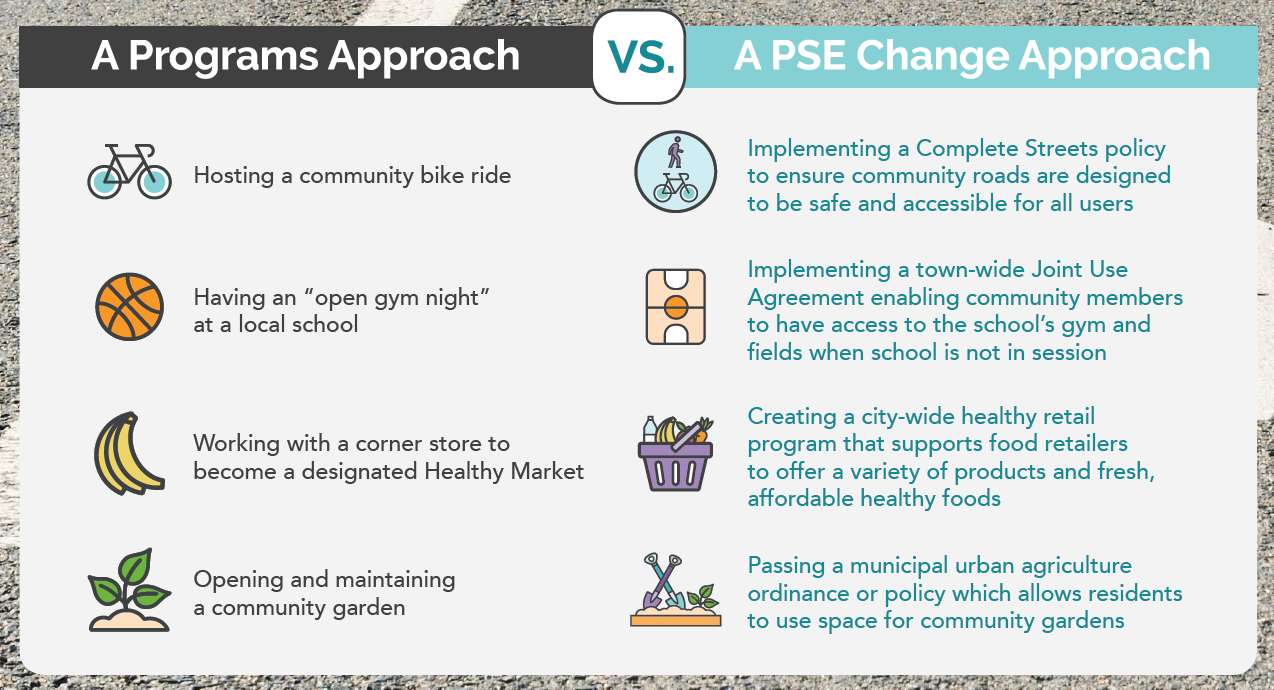
Healthy communities don’t just happen—they’re built together. One powerful way to bring them to life is through Healthy City Programs. Led primarily by local governments, these programs create opportunities for residents to live well by promoting active living, encouraging healthy eating, and fostering community connections. Just as importantly, they help shape local policies—like safer streets for walking and biking, better access to fresh foods, and stronger public health standards—that make healthy choices easier for everyone. By combining activities with lasting policy change, Healthy City Programs ensure that community well-being isn’t just a short-term effort, but a foundation for generations to come.
In San Bernardino County, several communities have established their own Healthy City Programs. These programs provide valuable opportunities for residents to participate in healthier living. At the same time, the Healthy Communities Initiative (HCI) builds on this foundation by focusing on policy, systems, and environmental (PSE) strategies—ensuring that change is embedded in how communities are planned, governed, and sustained. This broader framework means that even if a community does not have a formal Healthy City program, it can still use HCI principles to integrate health into local decision-making.
Current individual city programs:
HCI Collaborative Meetings
The Healthy Communities Initiative hosts quarterly virtual collaborative meetings designed for city and town staff across San Bernardino County. These meetings provide a space for local government representatives to connect, share experiences, and explore how policy, systems, and environmental (PSE) strategies can be used to address emerging and ongoing public health issues.
June 17, 2026 from 10am – 11:30am
September 16, 2026 from 10am – 11:30am
December 9, 2026 from 10am – 11:30am
March 2026 Meeting
Date: March 18, 2026, from 10 – 11:30 a.m.
Agenda | Meeting Summary | Slide Deck | Meeting Recording
December 2025 Meeting
Date: December 11, 2025, from 10 – 11:30 a.m.
Agenda | Meeting Summary | Slide Deck | Meeting Recording
September 2025 Meeting
Date: September 17, 2025, from 10 – 11:30 a.m.
HCI Learning Sessions
The Healthy Communities Initiative also hosts quarterly learning sessions that are open to all partners, including cities, community-based organizations, regional partners, and other stakeholders working to advance healthier communities across San Bernardino County. These sessions are designed to share tools, best practices, and emerging topics related to policy, systems, and environmental (PSE) strategies.
Learning Session #2: Energy Efficiency
April 15, 2026 from 1 – 2:15 p.m.
Learning Session #3: Chronic Disease Prevention
July 15, 2026 from 1 – 2:15 p.m.
Learning Session #4: Laws and Policies
October 21, 2026 from 1 – 2:15 p.m.
Learning Session #1: Community Resilience Centers
Date: February 18, 2026, from 1 – 2:15 p.m.
Meet Our Team
Bernadette Beltran
Healthy Communities Project Coordinator

Kimberly Smith
Health Education Specialist II
Email: Kimberly.Smith@dph.sbcounty.gov