HAIIP Infection Prevention and Control

Infection control prevents or stops the spread of infections in healthcare settings. The Centers for Disease Control and Prevention (CDC) and California Department of Public Health (CDPH) websites provide information on how germs spread, essential steps to prevent the spread of infections, guidelines and recommendations for healthcare settings, and continuing education courses on infection control topics for healthcare providers.
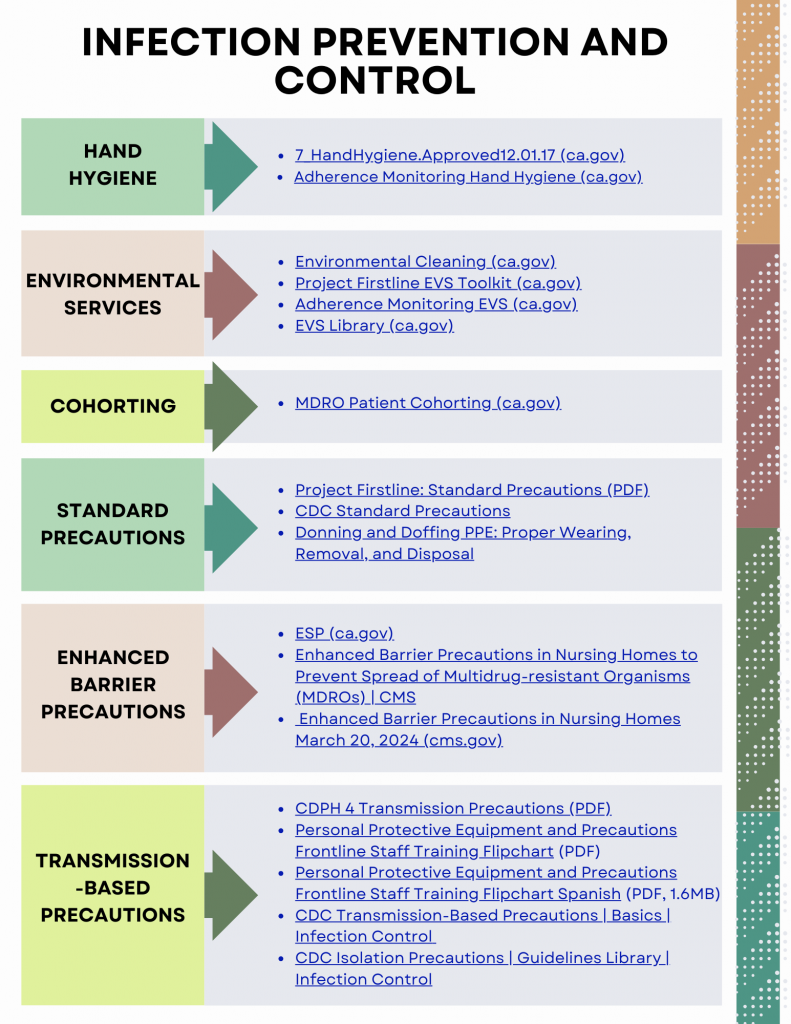
Infection Prevention and Control (IPC) Resources
- Standard PrecautionsStandard Precautions
- Hand HygieneHand Hygiene
- Environmental ServicesEnvironmental Services
- CohortingCohorting
- Enhanced Barrier PrecautionsEnhanced Barrier Precautions
- Transmission-Based PrecautionsTransmission-Based Precautions
Standard precautions are the basic practices that apply to all patient care, regardless of a patient’s suspected or confirmed infectious state.
Hand hygiene is a core IPC practice. Facilities must follow standardized protocols for handwashing, alcohol-based hand rub (ABHR) usage, and regular compliance monitoring.
Environmental services are essential in order to prevent transmission of healthcare-associated infections (HAIs).
- CDPH Environmental Cleaning
- CDPH Project Firstline EVS Toolkit
- CDPH Adherence Monitoring EVS
- CDPH EVS Best Practices for Cleaning and Disinfection Moment
- CDC Best Practices for Environmental Cleaning in Healthcare Facilities in Resource-Limited Settings
- CDPH EVS Library
- CDPH EVS Front Line Staff Training Flipchart (English)
- CDPH EVS Front Line Staff Training Flipchart (Spanish)
- EPA’s Registered Antimicrobial Products Effective Against Clostridioides difficile (C. diff) Spores [List K]
- EPA’s Registered Antimicrobial Products Effective Against Candida auris [List P]
Cohorting is recommended for residents infected or colonized with targeted multidrug-resistant organisms (MDROs). This includes grouping residents together who are infected/colonized with the same organism.
Enhanced Barrier Precautions is an infection prevention strategy designed to reduce multidrug-resistant organism (MDRO) transmission in skilled nursing facilities (SNFs) through targeted gown and glove use during high-contact resident care activities.
Transmission-Based Precautions are the second tier of basic infection control and are to be used in addition to Standard Precautions for patients who may be infected or colonized with certain infectious agents for which additional precautions are needed to prevent infection transmission. The appropriate transmission based precaution is determined by the type of organism and how it is usually transmitted.
- CDPH Transmission-Based Precautions (PDF)
- CDPH Personal Protective Equipment and Precautions Front Line Staff Training Flipchart (English)
- CDPH Personal Protective Equipment and Precautions Front Line Staff Training Flipchart Spanish (Spanish)
- CDC Transmission-Based Precautions | Basics | Infection Control
- CDC Isolation Precautions | Guidelines Library | Infection Control
Hand Hygiene for Patients in Healthcare Settings
Importance of Handwashing
Hand hygiene protects you and those you care for. The simple act of cleaning your hands can prevent the spread of germs, including those that are resistant to antibiotics.
Clean Hands in Healthcare Training
Clean and healthy hands are important at every level of healthcare. The CDC Hand Hygiene in Healthcare Settings Video Series is four short videos to help build a successful hand hygiene program.
Trainings
Project Firstline


Infection control prevents or stops the spread of infections in healthcare settings. The CDC website provides information on how germs spread, essential steps to prevent the spread of infections, guidelines and recommendations for healthcare settings, and continuing education courses on infection control topics for healthcare providers.

Project Firstline
It’s the CDC’s National Training Collaborative for Healthcare Infection Control. Project Firstline offers free infection control Training and Educational Materials and aims to supports frontline healthcare workers in better understanding and applying infection control as part of their role.
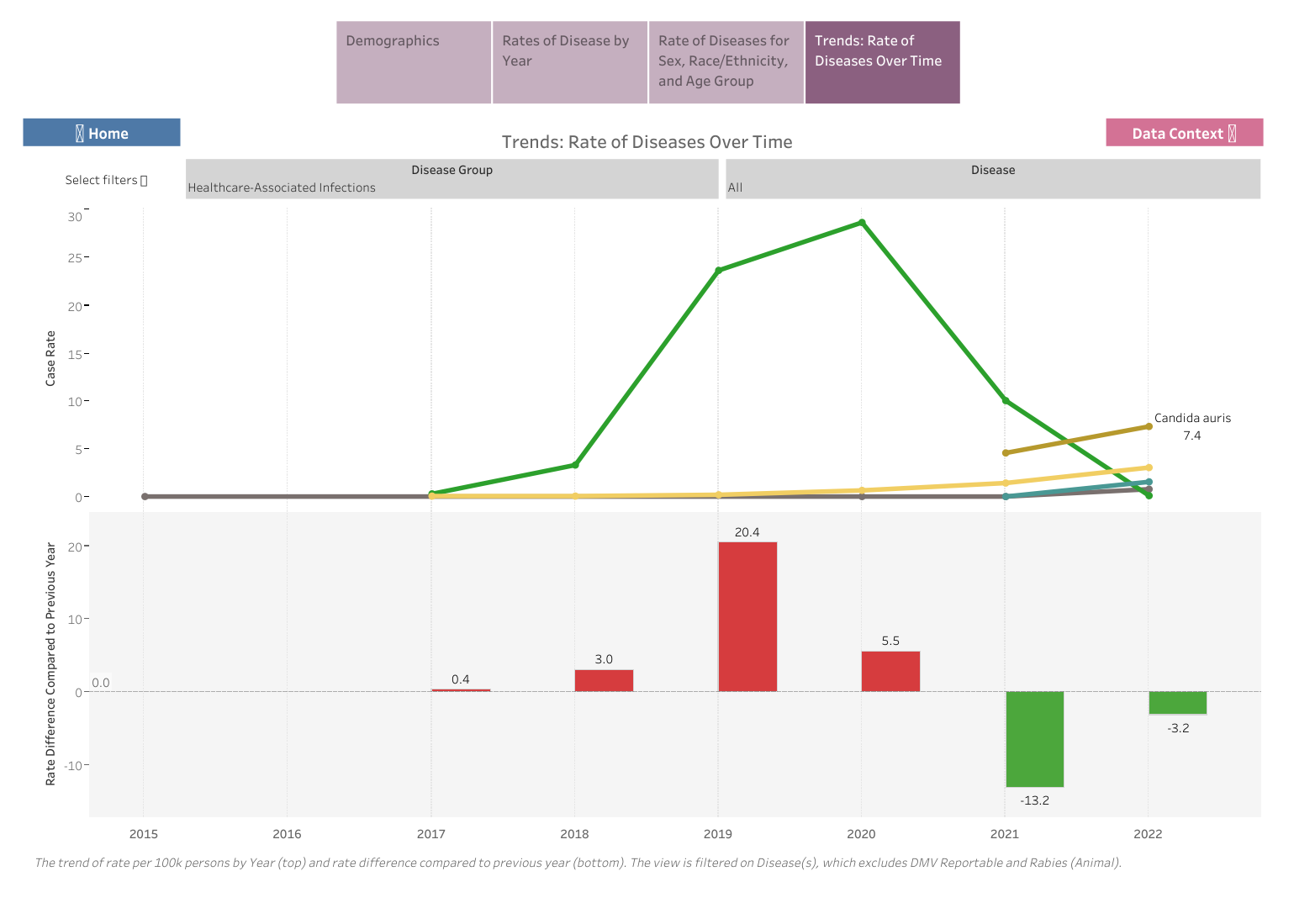
San Bernardino County Department of Public Health Data: Healthcare-Associated Infections (HAIs) Trends
The Communicable Disease Dashboard describes the extent and prevalence of various reported illnesses for residents in San Bernardino County. This information can be used to redirect disease control efforts.