Healthcare-Associated Infections and Infection Prevention (HAIIP) Program

- What is HAIIP?What is HAIIP?
- What services do we offer?What services do we offer?
- What are healthcare-associated infections?What are healthcare-associated infections?
- What are MDROs?What are MDROs?
- RegulationsRegulations
The Healthcare-Associated Infections and Infection Prevention (HAIIP) Program in the San Bernardino County Department of Public Health (DPH), Communicable Disease Section oversees infections that patients acquire while receiving treatment for other conditions within a healthcare setting. HAIIP focuses its efforts on providing technical assistance and support to keep patients, staff and visitors safe in skilled nursing facilities (SNFs), long-term care facilities (LTCFs), long-term acute care hospitals (LTACHs), and acute care hospitals (ACHs).
- Investigate outbreaks to reduce transmission (technical assistance)
- Facility site visits
- Antimicrobial Stewardship educational materials
- Educational support
- Fit-test training (train-the-trainer education)
- Trainings and resources on infection prevention for healthcare workers
- Provide current guidance on infection prevention and control

Healthcare-associated infections (HAIs) are infections people get while they are receiving healthcare for another condition. HAIs can happen in any healthcare facility, including hospitals, ambulatory surgical centers, end-stage renal disease facilities, and long-term care facilities. Bacteria, fungi, viruses, or other, less common pathogens can cause HAIs.
HAIs are a significant cause of illness and death — and they can have serious emotional, financial, and medical consequences. According to U.S. Department of Health and Human Services, on any given day, about 1 in 31 hospitalized patients has at least one infection related to hospital care. These infections lead to tens of thousands of deaths and cost the U.S. health care system billions of dollars each year.
HAIs are associated with a range of factors, including medical devices, surgical complications, transmission between patients and healthcare workers, antibiotic overuse, gaps in infection prevention and environmental services (EVS), and more.
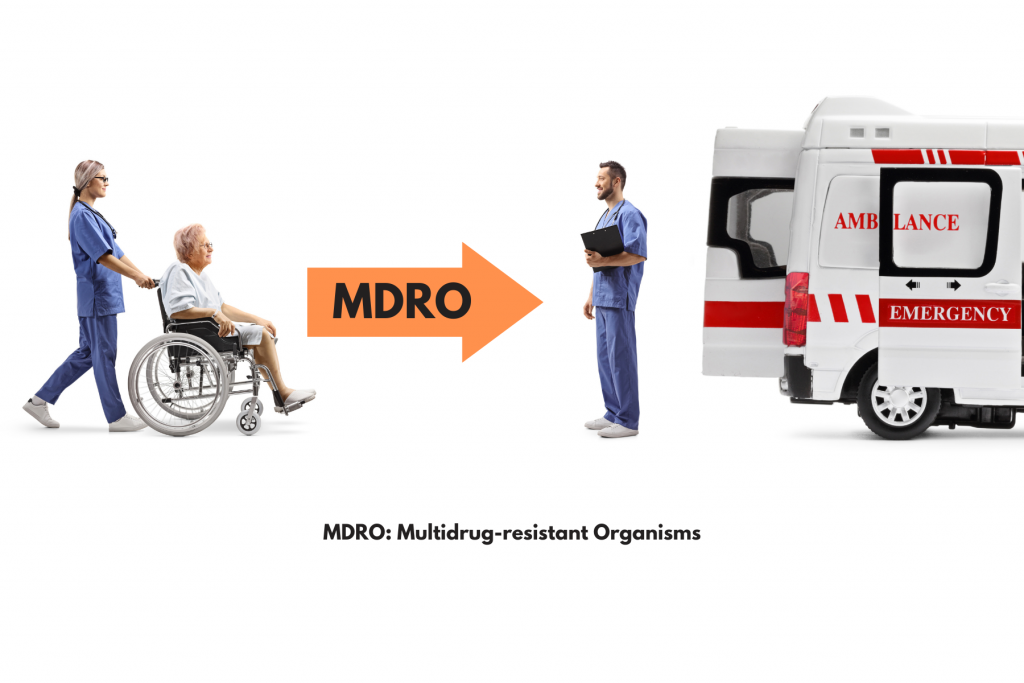
Multidrug-Resistant Organisms (MDROs) are bacteria or fungi, that are resistant to one or more classes of antibiotics or antifungals. Infections caused by MDROs can be more difficult and expensive to treat and can cause outbreaks in healthcare settings.
MDROs can spread from person-to-person via the hands or clothing of healthcare personnel, or touching contaminated surfaces and medical equipment. Infection prevention and control (IPC) practices help stop the spread of MDROs and protect patients in healthcare facilities.
To learn more about MDROs, please visit: HAIIP Healthcare-associated Infections.
The California Department of Public Health (CDPH) enforces federal and state codes, statutes, and regulations.
CDPH: Healthcare-Associated Infections (HAI) Program
Licensing and Certification: Regulations
- All Facilities Letters
- Title 17, California Code of Regulations (CCR) 2500, 2593, 2641.5-2643.20, and 2800-2812 Reportable Diseases and Conditions (PDF)
- California Code of Regulations, Title 22 § 85095.5 – Infection Control Requirements | State Regulations | US Law | LII / Legal Information Institute (cornell.edu)
- State and Federal Regulatory Requirements-Center for Health Care Quality (Power Point)
- Title 42 Part 483.80 Infection Control
Contact Us
Phone: 800-722-4794
HAIIP Fax: 909-381-8473
Email: HAIIP@dph.sbcounty.gov
Business Hours:
Monday – Friday
8 a.m. – 5 p.m.
After Hours: 800-472-2376 (available after hours, weekends, and holidays)
Safe resident transfers begin with clear, timely, infection prevention communication. The Interfacility Transfer Form helps ensure receiving facilities are immediately aware of important infection prevention and clinical considerations at the time of transfer.
This helps the receiving facility implement necessary precautions and continue appropriate treatment, reducing the risk of infection spread. Healthcare providers should use the form to ensure essential infection control information is communicated clearly between facilities.
This tool supports safer transitions between:
- Acute care hospitals
- Skilled nursing facilities (SNFs)
- Subacute units
- Long-term acute care hospitals (LTACHs)
- Congregate living health facilities (CLHFs)
- Dialysis centers
- Emergency room departments
- Specialty appointments
The interfacility transfer form should be a part of both the patient’s transfer and admission process. Treat the interfacility form as an infection prevention handoff tool, not just a discharge packet form.