Agenda For March 26, 2026
| Table of Contents | Presenter |
|---|---|
| Introduction and HAIIP Program Objections | Leticia Eastland, HAIIP Program |
| On-Site Assessments Summary | Leticia Eastland Emilio Barrantes, Operations Manager, Posner Management |
| Supporting IPs in LTACHs & SNFs | Raquel Torres, Totally Kids Rehabilitation Hospital |
| Benefits of Admission Testing | Elizabeth Baskaron, IP, Kindred Ontario |
| Break (10 minutes) | All |
| Moving Forward- Transition Plan | Jessica Lu, Epidemiologist Leticia Eastland Joseph Pak, Supervising CDI Cynthia Turk, Program Coordinator |
| All Facilities Letter Summary | John Holguin, Epidemiologist |
| Discussion Activity | Tanya Martinez, CDI |
| Questions & Answers | All |
| Announcements & Roundtable Discussion | All |
| Additional Resources | All |
Introductions and HAIIP Program Overview
Leticia Eastland, Registered Nurse
HAIIP Program, Communicable Disease Section
Healthcare-Associated Infections and Infection Prevention (HAIIP) Program
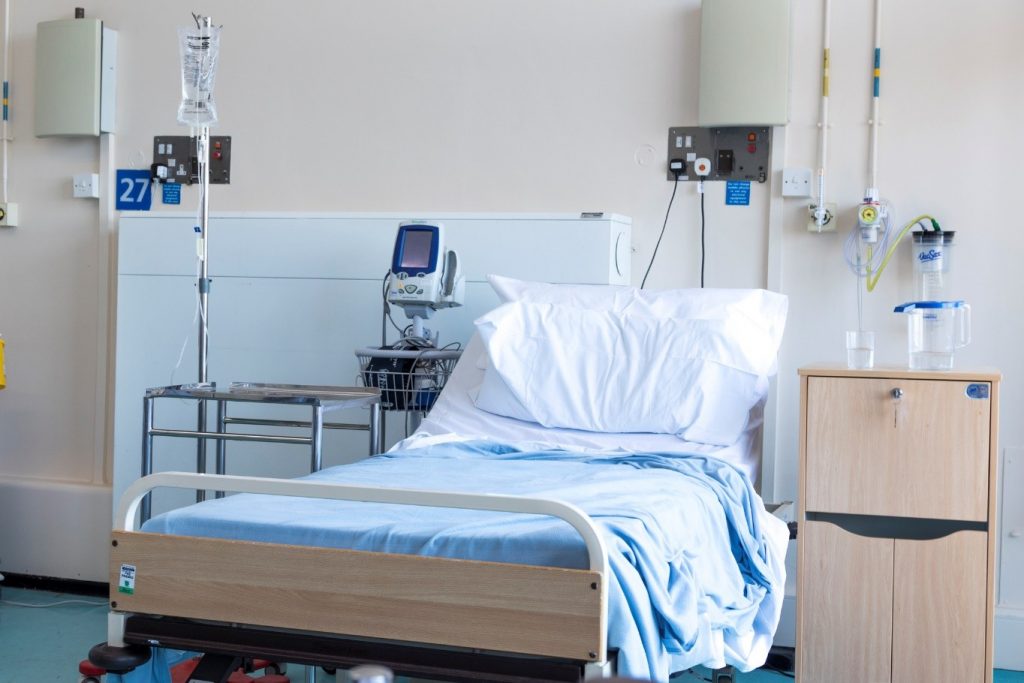
Program Objectives:
Training: Infection control practices, use of personal protective equipment (PPE), Train-the-Trainer, and current guidelines on managing healthcare-associated infections (HAIs).
Surveillance: Identify and report HAIs.
Mitigation: Rapid response and support for facilities experiencing an outbreak.
Ongoing Support: Provide technical assistance and direct support with healthcare facilities.
On-Site Assessments Summary of Findings
Leticia Eastland, BSN, RN, Registered Nurse HAIIP Program Communicable Disease Section
Emilio Barrantes, Operations Manager, Posner Management
Common Findings- Environmental Services (EVS) Cart Set-up
Disinfecting Wipes VS Microfiber Towels
Appropriate Disinfecting Wipes are an alternative – CONVENIENT!
- IV pumps, glucometers, small equipment
- Studies show a single wipe disinfects about an area of 3ft x 4ft (coffee table size) before drying, leading to inadequate manufacturer wet contact time.
- Is it cost effective to clean and disinfectant an entire resident room using wipes?
Microfiber towels soaked in liquid disinfectant are more effective and are recommended!
- Reduce surface bacteria by 99% compared with 33% reduction using conventional materials.
- In mop studies, microbial counts dropped by 99% with microfiber mops.
Common Findings- EVS Technique
This is the #1 Repeated Operational GAP!
All facilities need continued education on:
- “Cleaning In” zones
- “Clean to Dirty” progression
- “High to Low” technique
- “Outer to Inner” sequencing
- Glove changes + hand hygiene between tasks
- Disinfection consistency of high-touch surfaces
(Source: San Diego Couty HAI Program)
EVS Room Cleaning- The 3 Zones
Zone 1 – Shared Equipment and Common Surfaces:
•High-touch surfaces in outer areas of the room, like shared equipment and common surfaces. For example, alcohol-based hand rub (ABHR) dispenser, closets handles, PPE caddies, chairs, light switches, etc.
Zone 2 – Items Touched During Patient Care:
•Area around the bed – not the bed itself. This includes bedside table and drawer knobs, any remotes, telephone, and nightstand surfaces and knobs. Be sure to disinfect underneath tables, along edges, and around all handles.
Zone 3 – Patient and Direct Contact Items:
•The bed – It is considered the dirtiest! Start at the top of headboard to bottom, closest side rails, bed remote, other side rails, attached call bell, and footboard.
Place dirty cloth in collection bag, remove gloves, and use ABHR.
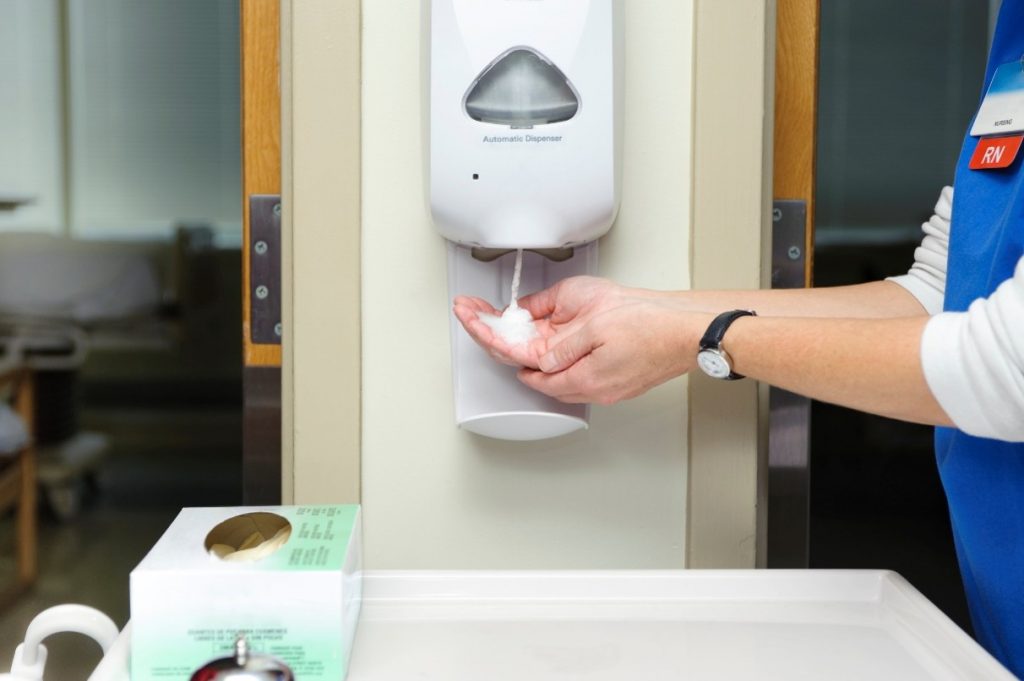
Common Findings- Hand Hygiene
Facilities report hand hygiene monitoring, but:
•Audit data from the facilities are often not provided
•Hand hygiene opportunities at room entry and exit were not consistently performed
•Observed adherence monitoring compliance rates varied from 57%- 100%
•Staff not applying enough alcohol – based hand rub (ABHR) to keep hands wet for at least 20 seconds while rubbing all surfaces
•Limited accessibility to ABHR dispensers observed
Common Findings- Disinfectant Selection
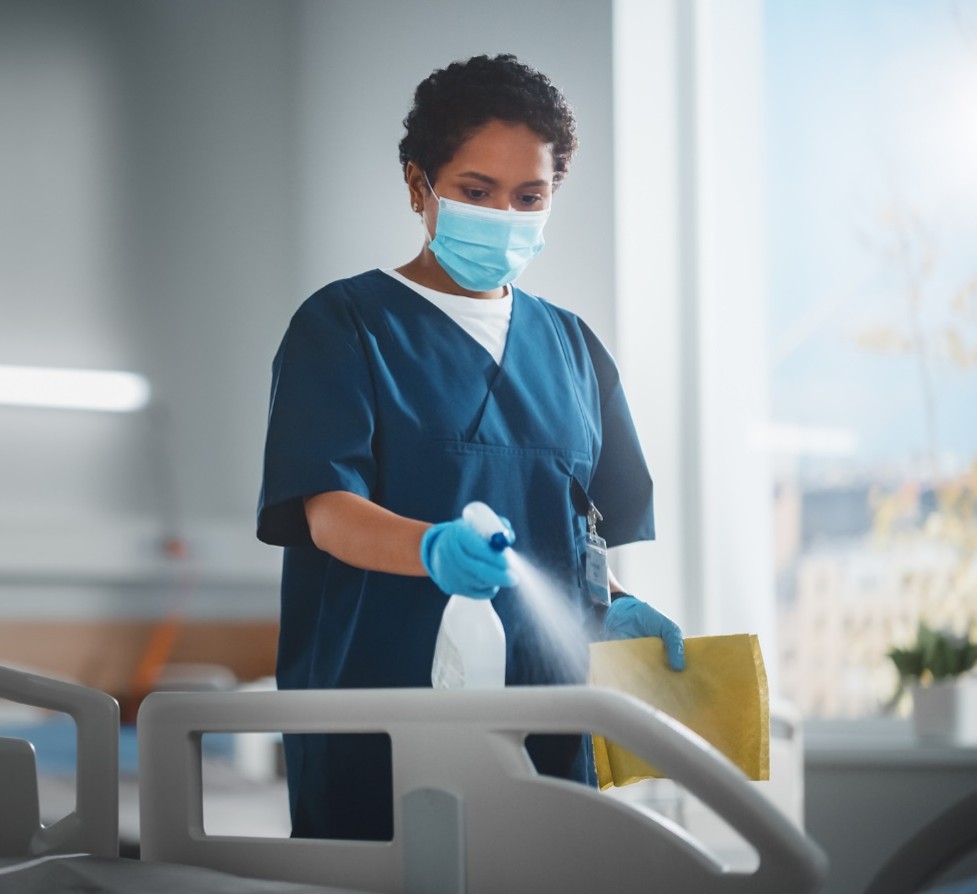
Facilities may have EPA List P products available, but challenges include:
•Confusion about correct EPA-registered disinfectant lists
•Inconsistent use of List P for multidrug-resistant organisms (MDROs)
•Continued use of household disinfectants in some cases
•Need for better understanding of contact (wet) time and label instructions
•Heavy use of spray bottles
•Use of List P wipes to disinfect patient rooms and large surface areas, this does not always achieve the required wet time necessary for disinfection. Based on the videos shown earlier, what would you suggest be used?
Common Findings – Interfacility Transfer Communication
Communication with other facilities:
•When sending and receiving a resident, utilize a transfer communication sheet (such as CDPH’s Healthcare Facility Transfer Form) that contains all pertinent information, including MDRO status.
•Transportation is also notified regarding MDRO status.
Healthcare Facility Transfer Form Comprehensive
Common Findings – Multidrug-Resistant Organism Surveillance
No surveillance and early detection for multidrug-resistant organisms (MDROs):
•No admissions-based MDRO testing for residents transferred in
•No routine Point Prevalence Surveys (PPS)

Back To Basics
CDPH HAI Program reminds us of the fundamentals of Infection Prevention:
IPC Practices
•Highlights of our IPC practices
- EVS
- Daily rounds
- HH auditing and process surveillance program
- MDRO education for staff
- On hire and annual infection control competencies
(Source: CDPH Healthcare-Associated Infections Program)
Supporting IPs in LTACHs & SNFs
Raquel Torres, LVN II, Infection Prevention and Control Nurse
Totally Kids Rehabilitation Hospital
Benefits of Admission Testing
Elizabeth Baskaron, Interim Infection Preventionist
Kindred Hospital, Ontario
Break (10 Minutes)
Moving Forward – Transition Plan
Jessica Lu, Epidemiologist
Leticia Eastland, Registered Nurse
Joseph Pak, Supervising Communicable Disease Investigator
Cynthia Turk, Program Coordinator
HAIIP Program, Communicable Disease Section
Investigations/Outbreak Management
•Outbreak-only Investigations
•Reporting Outbreaks:
•Facilities are expected to report outbreaks by sending reports to the HAIIP email: HAIIP@dph.sbcounty.gov or by calling the Communicable Disease Section (CDS) phone number at (800) 722-4794.
•Facilities can refer to the SBCDPH HAIIP website for guidance. Guidelines and resources on investigations, control measures, and management of single cases and outbreaks are being developed and will be shared on the website.

On-Site Assessments (Site Visits)
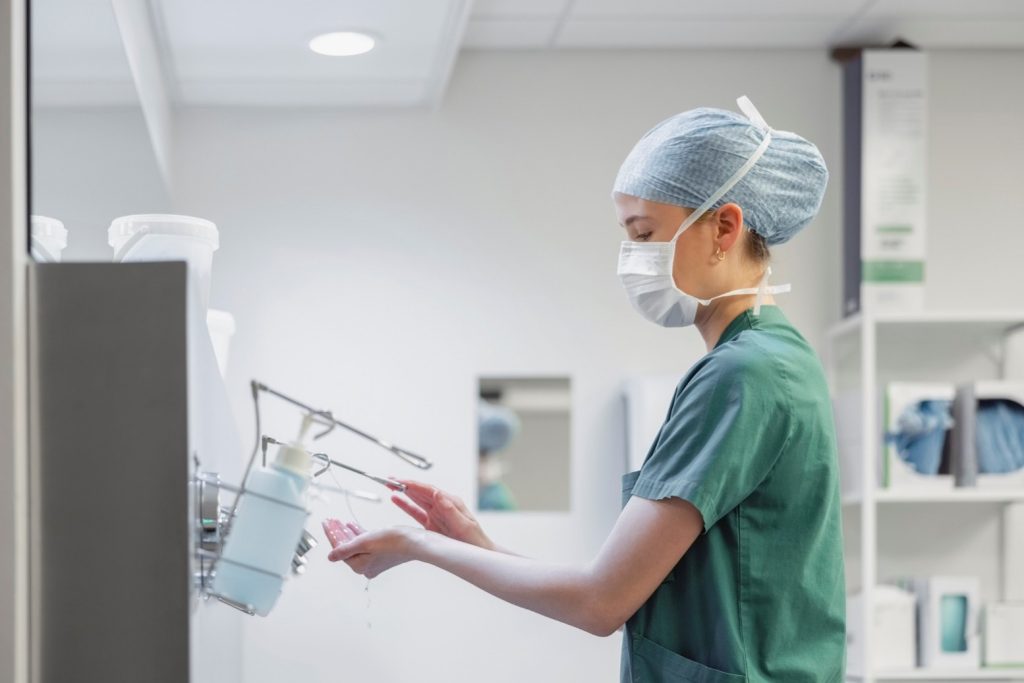
What You Can Expect…
•MDRO clusters or outbreaks
•New IP leadership
•Survey or regulatory findings
•Increase use of Self-Assessment tools
•Virtual check-ins
One Hour Check-Ins Sessions
HAIIP related education through discussion or presentations.
•These sessions will be virtual.
•Goal is to keep facilities connected and share lessons learned from each other.
•Opportunity for facilities to request a site visit.
•Sessions will begin in April.
•Future frequency of sessions TBD based on need.
Lab Services
Please contact the HAIIP inbox HAIIP@dph.sbcounty.gov for lab testing requests.
See DPH Lab fees 25-26 document for pricing.
Communication/Contacts
Facilities can use the HAIIP email HAIIP@dph.sbcounty.gov to request educational material, secure a site visit, or ask questions.
Or you can call the Communicable Disease Section (CDS) at 800-722-4794, Monday through Friday, from 8 a.m. – 5 p.m.
Resources
For more information:
•San Bernardino County Communicable Disease Section (CDS):
About Communicable Disease Section (CDS) – Department of Public Health
•San Bernardino County CDS Healthcare-Associated Infection and Infection Prevention (HAIIP) Program:
HAIIP Temporary (new) – Department of Public Health
•California Department of Public Health (CDPH) Healthcare-Associated Infections (HAI) Program:
All Facilities Letter Summary
John Holguin, MPH, Public Health Epidemiologist
HAIIP Program, Communicable Disease Section
Discussion Activity
Tanya Martinez, B.A., Communicable Disease Investigator, HAIIP Program, Department of Public Health
Questions & Answers
Announcements & Roundtable Discussion
Additional Resources
https://www.cdph.ca.gov/Programs/CHCQ/LCP/pages/lncafl.aspx
https://www.cdph.ca.gov/Programs/CHCQ/HAI/Pages/SNF_DetectAndControlOutbreaks.aspx
https://www.cdph.ca.gov/Programs/CHCQ/HAI/Pages/OutbreakInvestigationResponse.aspx
https://www.cdph.ca.gov/Programs/OPA/Pages/CAHAN/Increase-of-Measles-in-California.aspx
Measles Investigation Quicksheet
https://www.cdph.ca.gov/Programs/CID/DCDC/CDPH%20Document%20Library/ReportableDiseases_June2025.pdf
https://apic.org/wp-content/uploads/2022/10/WhoAreIPs_Infographic.pdf
vSNF Adherence Monitoring Flourescent Marker Assessment Tool
Thank you
Contact Us!
HAIIP Program
Communicable Disease Section
800-722-4794
HAIIP@dph.sbcounty.gov
451 E. Vanderbilt Way, San Bernardino